
S&K Blog
Commercial Building Winter Maintenance: Is Your Property Ready for Winter Weather?
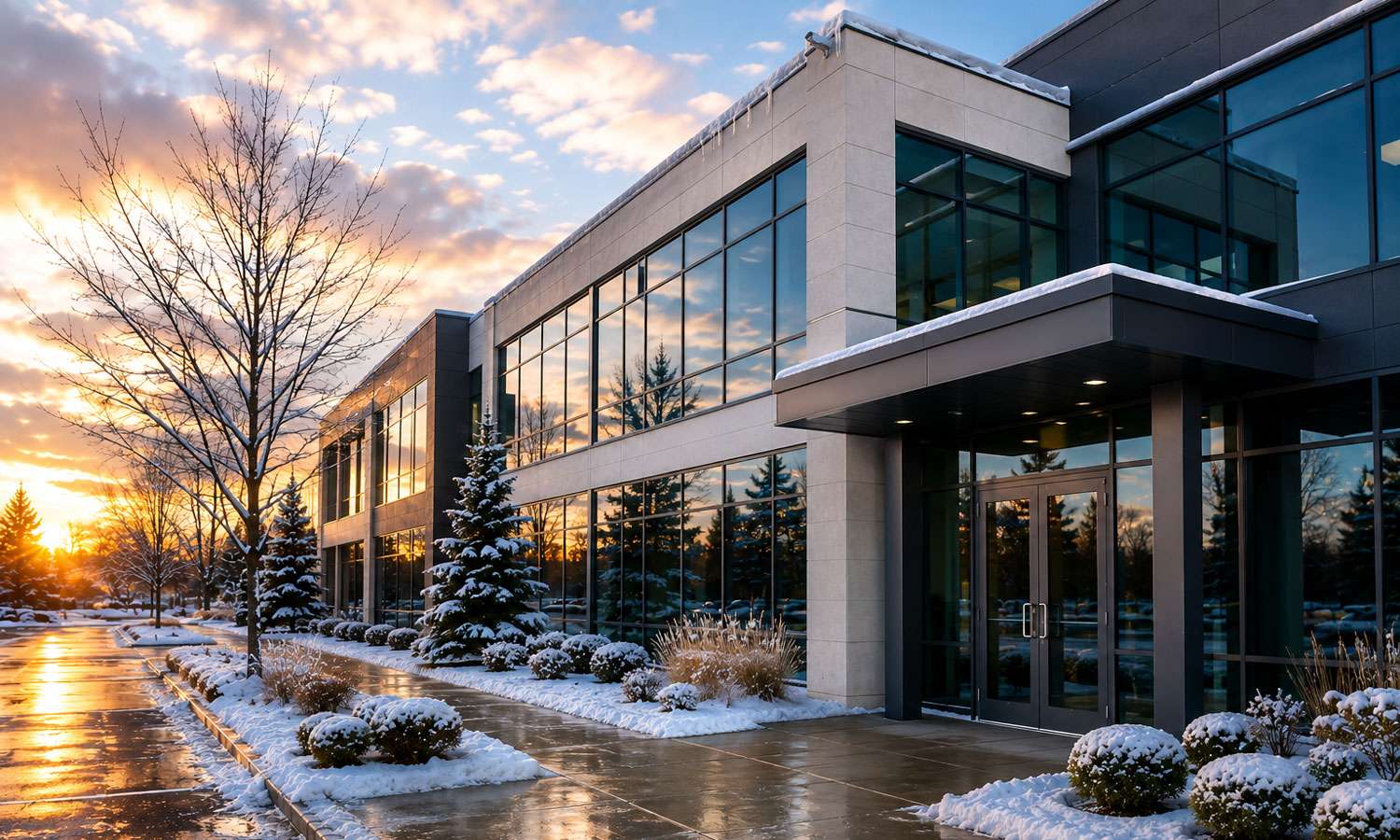
Winter building problems rarely begin with the first snowfall.
Many of the conditions that create headaches during winter are already developing in late summer and early fall: clogged drainage systems, deteriorating sealants, dirty glass, worn exterior surfaces, standing water, and maintenance projects that have been postponed one season too long.
Once temperatures drop, those existing conditions may become more difficult to address.
That’s why commercial building winter maintenance should begin before winter arrives.
For property managers and facility teams, fall provides an important opportunity to inspect the exterior, complete seasonal cleaning, address appropriate maintenance concerns, and identify conditions that require further evaluation.
The goal isn’t simply to prepare for snow.
It’s to send the entire property into winter in the best condition possible.
Why Commercial Winter Preparation Starts in the Fall
Commercial buildings are exposed to changing conditions throughout the year.
Rain, UV exposure, wind, pollution, biological growth, dirt, mineral deposits, and normal material aging all affect exterior surfaces. By late summer, months of exposure may have left behind buildup or revealed areas that deserve attention.
Then fall adds leaves and seasonal debris.
Winter follows with freezing temperatures, snow, ice, road salt, deicing materials, and repeated freeze-thaw cycles in many parts of the country.
Waiting until then to evaluate the property limits your options.
Fall gives facility teams time to identify what needs to be cleaned, what needs routine maintenance, what should be monitored, and what requires evaluation by an appropriate building professional.
1. Clear Gutters and Roof Drains Before Leaves Accumulate
Water management should be near the top of any commercial property’s winter preparation list.
Gutters, downspouts, roof drains, scuppers, and exterior drainage systems are designed to move water away from areas where it shouldn’t collect.
Leaves and debris can interfere with that process.
A drainage system that is partially obstructed in September may become completely clogged as leaves continue to fall.
What Property Managers Should Check
Before winter, inspect accessible drainage areas for:
- Leaves and organic debris
- Dirt and sediment
- Obstructed gutters
- Clogged downspouts
- Blocked roof drains
- Debris around scuppers
- Standing water
- Evidence of previous overflow
- Areas where water repeatedly collects
Pay attention to the entire drainage path rather than only the drain itself.
Where does the water come from?
Where is it supposed to go?
Where does it actually collect?
Repeated standing water or overflow may indicate a condition that requires additional investigation.
Why Drainage Matters Even More During Winter
Once temperatures begin dropping below freezing, water accumulation introduces another concern: ice.
Water that doesn’t drain appropriately can freeze on walking surfaces or in other areas of the property.
Snowmelt also needs somewhere to go.
Clearing drainage systems in the fall doesn’t guarantee that winter drainage problems won’t occur, but it eliminates one very preventable cause: accumulated seasonal debris.
2. Inspect the Building Exterior for Cracks, Failed Sealants and Potential Water Entry Points
Your building envelope spends the entire year protecting interior spaces from exterior conditions.
Fall is an ideal time to walk the property and look for visible changes.
This doesn’t need to be a technical building-envelope inspection. Property managers can begin with a visual assessment and document anything that appears different, deteriorated, or concerning.
Exterior Conditions to Look For
- Cracked or deteriorating sealants
- Gaps around windows or exterior joints
- Visible cracks in exterior surfaces
- Loose panels or components
- Missing or deteriorated materials
- Recurring water stains
- Rust or oxidation runoff
- Biological growth
- Areas of persistent moisture
- Unusual façade discoloration
Take photographs and record the exact location of anything unusual.
If a condition involves possible structural issues, water intrusion, or building-envelope failure, have it evaluated by an appropriately qualified professional.
Don’t Ignore Small Changes
A small exterior condition doesn’t automatically indicate a major building problem.
But it is useful information.
If a crack, stain, or deteriorating joint is documented this fall, you can compare it during future inspections.
Has it changed?
Is the staining spreading?
Does moisture continue to appear in the same area?
Documentation turns a one-time observation into useful maintenance history.
3. Clean Commercial Glass Before Shorter Daylight Hours Arrive
Fall window cleaning isn’t only about curb appeal.
Clean glass can improve the appearance of a commercial property while maximizing available natural light as daylight hours become shorter.
Summer can leave exterior windows covered with:
- Dirt and dust
- Pollen
- Pollution
- Hard water deposits
- Mineral buildup
- Irrigation overspray
- Bird activity
- Construction residue
- Oxidation runoff
Routine commercial window cleaning removes normal surface contamination and gives property teams a clearer view of the condition of the glass and surrounding components.
Look Beyond “Dirty Windows”
Pay attention to glass that remains cloudy, stained, or discolored after routine cleaning.
Persistent hard water deposits, mineral staining, or oxidation runoff may require commercial glass restoration rather than standard window cleaning.
Addressing these conditions earlier can provide more options than allowing them to remain on the glass through another season.
For high-rise and multi-story buildings, professional window cleaning also puts trained technicians in proximity to exterior areas that may rarely be observed closely from the ground.
4. Prepare Sidewalks and Entrances for Changing Weather
Entrances and sidewalks experience some of the heaviest pedestrian traffic on a commercial property.
They are also directly exposed to rain, falling leaves, snow, ice, dirt, and winter deicing products.
Before winter arrives, walk all primary pedestrian routes.
Inspect:
- Main entrances
- Secondary entrances
- Sidewalks
- Steps
- Ramps
- Loading areas
- Curbs
- Exterior drains
- Building overhangs
- Entry glass
- High-traffic transition areas
Look for dirt, biological growth, staining, debris, standing water, and other visible conditions.
Commercial pressure washing and soft washing can help remove seasonal buildup from appropriate exterior surfaces before winter.
Cleaning these areas in advance also gives property teams a better opportunity to observe the underlying condition of walking surfaces before snow and ice begin covering them.
5. Don’t Forget the Parking Structure
Parking garages experience a significant change when winter arrives.
Vehicles begin bringing moisture, road salt, deicing chemicals, slush, dirt, and road debris into the structure.
If the garage already contains months of accumulated dirt and contamination, another winter simply adds to the buildup.
Fall Parking Garage Checklist
Before colder weather arrives:
- Remove accumulated dirt and debris
- Inspect drains for obvious obstructions
- Look for standing water
- Check corners and low-traffic areas
- Review pedestrian walkways
- Inspect stairwells
- Check entrances and exits
- Look for oil and vehicle-fluid staining
- Document visible cracks, leaks, spalling, or other conditions requiring professional evaluation
A planned parking garage cleaning can help reset the structure before another season of winter contamination begins.
It also makes existing surface conditions easier to observe.
6. Address Exterior Surface Buildup Before Winter
Exterior façades collect contamination gradually.
Pollution, biological growth, dirt, bird activity, mineral deposits, rust staining, and environmental residue can remain on exterior surfaces season after season.
Depending on the building material and condition, professional façade cleaning, building washing, pressure washing, or soft washing may be appropriate.
Fall is a useful time to assess these surfaces because weather conditions may still allow exterior work to be completed before winter limits scheduling options.
Pay particular attention to areas with recurring buildup.
If staining repeatedly returns to the same location, the pattern itself may be worth investigating.
7. Review Roof Anchors and Exterior Access Systems
If your property uses permanent roof anchors or other façade access equipment, don’t wait until exterior work is scheduled to determine whether required inspections are current.
Exterior access systems are critical to safely completing work on many multi-story and high-rise buildings.
Including roof anchor inspection and certification in the property’s maintenance calendar can help prevent scheduling delays when window cleaning, façade maintenance, or other exterior services are needed.
Fall maintenance planning is a good opportunity to review inspection records and determine whether any upcoming requirements should be incorporated into the building’s maintenance schedule.
8. Complete Exterior Maintenance While Conditions Are Still Favorable
One of the simplest reasons to handle exterior maintenance in fall is flexibility.
Once winter weather arrives, exterior work may be affected by:
- Freezing temperatures
- Snow
- Ice
- High winds
- Shorter daylight hours
- Unsafe surface conditions
- Limited scheduling windows
Waiting doesn’t necessarily make the project disappear.
It may simply make it harder to complete.
Property managers who review maintenance needs early have more time to prioritize projects and coordinate appropriate service before weather becomes a limiting factor.
Your Pre-Winter Commercial Property Checklist
Before winter arrives, walk your property and review these areas:
- Clear gutters and downspouts.
- Check accessible roof drains and scuppers.
- Look for standing water or recurring drainage problems.
- Inspect exterior sealants and joints for visible deterioration.
- Document cracks, loose components, or unusual façade conditions.
- Check exterior glass for dirt, hard water, and mineral deposits.
- Identify glass that may require restoration.
- Clean entrances and high-traffic exterior surfaces.
- Inspect sidewalks, steps, ramps, and pedestrian areas.
- Review exterior drains near entrances.
- Inspect parking garage drains and traffic areas.
- Address accumulated parking structure debris.
- Review façade surfaces for heavy buildup or staining.
- Confirm applicable roof anchor inspections are current.
- Photograph and document conditions that need monitoring.
- Schedule appropriate exterior maintenance before winter conditions arrive.
Create a Winter-Ready Maintenance Plan
After completing the inspection, divide your findings into four categories.
Address Now
Conditions requiring immediate attention or evaluation.
Complete Before Winter
Cleaning and routine maintenance that should ideally occur while weather conditions remain favorable.
Monitor
Items that don’t currently require action but should be documented and reviewed again.
Budget for Later
Larger restoration, repair, or capital projects that should be incorporated into future planning.
This prevents every observation from becoming an emergency while ensuring important items aren’t forgotten.
Winter Preparation Looks Different Across a National Portfolio
Winter readiness isn’t identical in every market.
A commercial property in Milwaukee or Chicago faces different seasonal conditions than a building in Phoenix or West Palm Beach.
Even properties in warmer climates can experience seasonal rainfall, storms, environmental buildup, drainage concerns, and changing maintenance needs.
For multi-location portfolios, the goal shouldn’t necessarily be an identical maintenance schedule at every property.
It should be a consistent process for evaluating each property’s needs and scheduling the appropriate services for its location, building materials, environmental exposure, and operating requirements.
Supporting Commercial Properties Nationwide
S&K Building Services provides professional exterior building maintenance services across a growing network of markets throughout the United States.
From individual commercial properties to multi-location portfolios, we help property and facility management teams coordinate exterior cleaning and maintenance with consistent service standards across locations.
Our service areas include:
- Atlanta, GA
- Chicago, IL
- Cincinnati, OH
- Cleveland, OH
- Denver, CO
- Detroit, MI
- Finger Lakes, NY
- Grand Rapids, MI
- Indianapolis, IN
- Lansing, MI
- Louisville, KY
- Madison, WI
- Milwaukee, WI
- Nashville, TN
- New Orleans, LA
- Phoenix, AZ
- Portsmouth, OH
- Rochester, NY
- St. Louis, MO
- West Palm Beach, FL
With local teams operating throughout these regions, S&K Building Services can support exterior maintenance for individual buildings as well as regional and national commercial property portfolios.
Go Into Winter With Confidence
Winter readiness isn’t about predicting every problem a commercial building might experience.
It’s about taking care of what you can before conditions become more difficult.
Clear the drainage systems. Inspect the exterior. Clean the glass. Prepare entrances and sidewalks. Review the parking structure. Address exterior buildup. Document developing concerns.
Then create a plan for anything that remains.
S&K Building Services provides commercial window cleaning, high-rise window cleaning, pressure washing, soft washing, façade cleaning, parking garage cleaning, glass and metal restoration, roof anchor inspection, roof anchor installation, and specialty exterior building services for commercial properties across the United States.
Whether you’re responsible for one commercial building or an entire property portfolio, our teams can help you prepare your exterior maintenance program for the season ahead.
Talk with S&K Building Services about preparing your commercial property or portfolio for winter weather.
Get Your Property Winter-Ready
Prepare your building before colder weather arrives. S&K Building Services can help address exterior maintenance needs while conditions are still favorable.
- Commercial exterior cleaning
- Glass & façade maintenance
- Parking structure cleaning
- Multi-location portfolio support
Tell us about your property to get started.
Frequently Asked Questions About Commercial Building Winter Maintenance
Late summer and early fall are good times to begin reviewing winter maintenance needs. Starting early gives property managers time to inspect exterior conditions, clear drainage systems, schedule cleaning, and address appropriate maintenance concerns before colder weather limits exterior work.
Common pre-winter maintenance priorities include clearing gutters and drains, commercial window cleaning, building and façade cleaning, parking garage cleaning, pressure washing, checking exterior drainage areas, and visually reviewing sealants and exterior surfaces for conditions that may require further evaluation.
Leaves and debris can obstruct drainage systems and prevent rainwater or melting snow from draining properly. Clearing accessible gutters, roof drains, downspouts, and scuppers before winter can help reduce preventable drainage problems.
Fall can be a useful time for commercial window cleaning because it removes summer buildup before colder weather and shorter daylight hours arrive. Cleaning also makes persistent staining, mineral deposits, and other glass conditions easier to identify.
Vehicles can carry road salt, moisture, slush, dirt, and deicing materials into parking structures throughout winter. Cleaning accumulated debris beforehand provides a cleaner starting point and makes existing surface and drainage conditions easier to observe.
Exterior cleaning cannot prevent every type of winter damage or correct structural and building-envelope defects. However, regular cleaning removes buildup, helps keep drainage areas clear, and can make exterior conditions easier to observe as part of a broader preventative maintenance program.
Start with a consistent inspection process across the portfolio, then prioritize maintenance based on each property’s climate, building materials, service history, and current condition. A centralized maintenance schedule can help coordinate recurring services while still allowing individual properties to have different seasonal needs.
Look for clogged drainage areas, standing water, deteriorating sealants, cracks, loose exterior components, stained glass, façade buildup, dirty entrances, parking structure debris, and other visible changes. Document anything unusual and refer conditions outside routine cleaning and maintenance to the appropriate qualified professional.
Common winter maintenance concerns include clogged or frozen drainage areas, ice accumulation, water intrusion, exterior surface deterioration, dirty or stained glass, and buildup of road salt and debris in parking structures and entrances. Many of these conditions can be identified or addressed during fall maintenance before winter weather arrives.
Ready to Get Started?
S&K is ready to get to work for you! A member of our team is available to discuss your needs and deliver a timely estimate of services.
Contact Us